“The fastest way to derail a cleanup is by tossing the wrong thing into a dumpster.”
If you work in construction, remodeling, property management, or even if you’re a homeowner tackling a renovation, you’ve probably experienced this dilemma. You’re in the middle of a project, the debris is piling up, and you start wondering what actually belongs in the dumpster sitting in your driveway. You assume everything can go inside. After all, it is a dumpster.
But Florida has strict rules. Landfills have even stricter ones. And if you throw the wrong item into a rental dumpster, the consequences are not small. Extra fees, rejected loads, project delays, or a full return trip that wastes your entire day.
So let’s make this simple. Whether you are in Naples, Bonita Springs, Estero, or anywhere in Southwest Florida, this guide explains exactly what you can toss and what needs special handling. If you want to avoid surprise charges, angry HOA managers, or the waste facility rejecting your load, this is your blueprint.
Why Dumpster Restrictions Exist in Florida
Before we dive into the lists, you should know why some items are banned.
It comes down to three things:
1. State Environmental Regulations.
Florida protects groundwater, soil, and coastal ecosystems aggressively. Many materials leak toxins or heavy metals.
2. Landfill Acceptance Rules.
Landfills refuse items that contaminate the facility or require special disposal equipment.
3. Safety for Drivers and Facilities.
Certain objects can explode, combust, or damage transfer equipment.
If it seems like a lot, it is. But that’s why Eco Box Dumpster Rentals powered by Eco Demolitions handles these rules for you. Our goal is to make your cleanup painless and fully compliant.
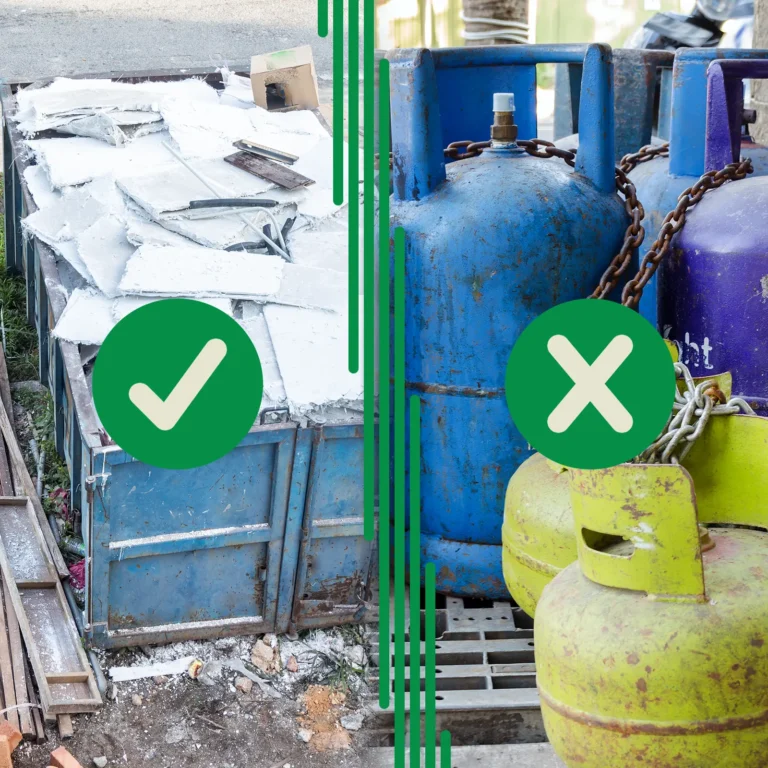
What You CAN Put in a Dumpster in Florida
Let’s start with the easy part. These materials are accepted in standard construction and household dumpsters across most Florida facilities.
Construction Debris
This is the most common category and includes anything that comes out of a renovation or demolition job. Florida landfills accept:
- Tile
- Drywall
- Plaster
- Lumber and framing
- Doors and interior trim
- Windows without chemicals
- Flooring debris
- Cabinets and vanities
- Countertops
- Baseboards and molding
If you are doing a kitchen remodel in Naples or tearing out walls in Bonita Springs, all of this goes in without a problem.
Roofing Materials
Roof replacements are extremely common in SWFL. The following roofing debris is allowed:
- Shingles
- Tar paper
- Roofing felt
- Underlayment
- Metal roofing panels
- Wood sheathing
If you are disposing of tile roofing, be conscious of weight. Tile is heavy and fills weight limits fast.
Yard Debris
South Florida landscapes generate a surprising amount of organic waste. The good news is that most of it is acceptable:
- Branches
- Leaves
- Grass
- Palm fronds
- Small stumps
- Bush and shrub removal debris
If the material is excessively large or heavy, check with your provider. Most SWFL disposal sites accept yard debris without issues.
Household Junk
This is one of the most common dumpster categories for estate cleanouts, garage clear-outs, and move-out prep.
Accepted items include:
- Furniture
- Clothing
- Toys
- General household trash
- Boxes
- Non-hazardous personal items
If you’re clearing out a home in Golden Gate or updating a rental property in Marco Island, this category covers most of what you’ll generate.
Flooring and Surface Materials
Since Eco Demolitions handles a significant amount of flooring removal across Naples and Bonita Springs, here is what can go in your dumpster:
- Tile
- Thinset debris
- Carpet
- Carpet pad
- Laminate
- Hardwood
- Vinyl plank
- Stone or marble flooring
- Underlayment
Again, weight is the only concern. Tile, stone, and marble become very heavy, very fast.
Concrete, Brick, and Masonry
Florida allows concrete disposal in dumpsters, but it must be handled correctly.
You can throw away:
- Clean concrete
- Concrete with rebar
- Brick
- Pavers
- Asphalt chunks
- Block
However, these items often require a dedicated concrete load. At Eco Box, concrete can only fill half of the 15 yard dumpster due to weight restrictions. For more information on which dumpster size would work best for your project, read more in our dedicated post here.
What You CANNOT Put in a Dumpster in Florida
Now for the important part. Florida is strict about prohibited materials, and waste facilities enforce these rules heavily. If any of these end up in your dumpster, the entire load can be rejected.
Paint, Stains, and Chemical Liquids
Florida law prohibits all forms of liquid waste inside dumpsters.
That includes:
- Paint
- Stains
- Varnish
- Lacquers
- Paint thinners
- Solvents
- Adhesive liquids
- Oils
If it can spill, contaminate groundwater, or leak into soil, it cannot go inside.
At Eco Box, paint is specifically listed as an additional fee item because it requires specialized disposal.
Batteries
All batteries contain corrosive material or heavy metals. These are banned from standard dumpsters.
Not allowed:
- Car batteries
- Lithium batteries
- Rechargeable tool batteries
- Boat batteries
Dispose of them through hazardous waste centers.
Appliances Containing Refrigerant
Refrigerants must be removed by certified technicians.
You cannot throw in:
- Refrigerators
- Freezers
- AC units
- Mini fridges
- Wine coolers
Once refrigerant is removed, the appliance may be accepted, but only after documentation.
Tires
Florida prohibits tires in dumpsters because they float to the surface of landfills.
At Eco Box, we accept them as an extra fee item because they must be handled separately.
- Car tires
- Truck tires
- Trailer tires
All require individual disposal pricing.
Hazardous Waste
This is the biggest category of prohibited materials.
Florida bans anything classified as hazardous under state or federal guidelines.
Examples include:
- Gasoline
- Propane tanks
- Aerosol cans
- Pesticides
- Pool chemicals
- Cleaning acids
- Bleach in large quantities
- Fireworks
- Fertilizer
- Chlorine tablets
These materials can explode, combust, or poison groundwater.
Medical Waste
Never dispose of medical products in a rental dumpster. That includes:
- Needles
- Sharps
- Medication bottles
- Medical device components
- Biohazard bags
These items require certified medical disposal.
Electronics with Hazardous Components
Some electronics contain mercury, lead, or pressurized components.
These items are prohibited:
- Televisions
- CRT screens
- Some older monitors
- Certain light ballasts
- Large electronics with capacitors
Check with your provider before tossing any electronic device.
Whole Propane Tanks or Pressurized Containers
These containers can explode when compacted.
- Propane tanks
- Gas cylinders
- Scuba tanks
- Fire extinguishers
Eco Box accepts propane tanks as an additional fee item, but never inside standard debris loads.
How to Stay Fully Compliant
Florida waste rules can feel complicated, but here is what every homeowner, contractor, and property manager should do:
1. Ask your dumpster provider before you rent.
They know what each local landfill accepts.
2. Keep liquids far away from your debris pile.
Most issues come from forgotten cans of paint or leftover household chemicals.
3. Keep a simple “restricted item” box.
Collect batteries, paint, or chemicals separately so nothing gets tossed by mistake.
4. Never assume that something is acceptable.
One wrong item can cause a full load rejection.
5. Use Eco Box if you want clear rules and no confusion.
We provide precise guidelines and help you identify restricted items before pickup.
Final Thoughts
Renting a dumpster seems simple, but Florida’s disposal rules mean you need to be informed before filling one. When you know what belongs and what doesn’t, you avoid fees, delays, contamination risks, and return trips.
At Eco Box Dumpster Rentals powered by Eco Demolitions, we make cleanup fast, compliant, and stress free. Whether you are clearing a condo, remodeling a home, or handling a full demolition project, we guide you at every step so your debris goes exactly where it should.
If you want to clean smarter, save money, and avoid violations, understanding these rules is the first step. The second is contacting us to get your rental dumpster delivered on the same day.
FAQ: What Can I Put in a Dumpster in Florida
A: Yes. Sofas, chairs, tables, and household furniture are fully acceptable.
A: Yes, but it usually requires a concrete-only load with weight restrictions.
A: Not if they contain liquid. Dry, empty cans may be accepted, but sealed cans with liquid paint are prohibited.
A: Appliances containing refrigerant are not allowed until the refrigerant has been professionally removed.
A: Yes. Leaves, branches, palm debris, and shrubs are acceptable.
A: The landfill may reject the entire load and the customer becomes responsible for additional fees. This is why it’s important to review your provider’s prohibited list.